
Designing a Home for Elon Musk: The Future of Intelligent Living
A conceptual exploration of ultra-advanced residential design for visionary innovators


A vision of home automation in the coming decade
I want to share with you a reflection that fascinates me more and more: the coming decade will radically transform the concept of domestic space. It won't just be about smart homes with lights controlled from your phone, but about dwellings designed from the outset to host a humanoid robot companion.
Let's imagine this home of the near future together.
The Reimagined House
When we talk about artificial intelligence in homes today, we think of smart thermostats and video doorbells. But what emerges from the most advanced research is quite different: homes designed around a new need: sharing space with a humanoid assistant that understands, executes, and optimizes daily tasks.
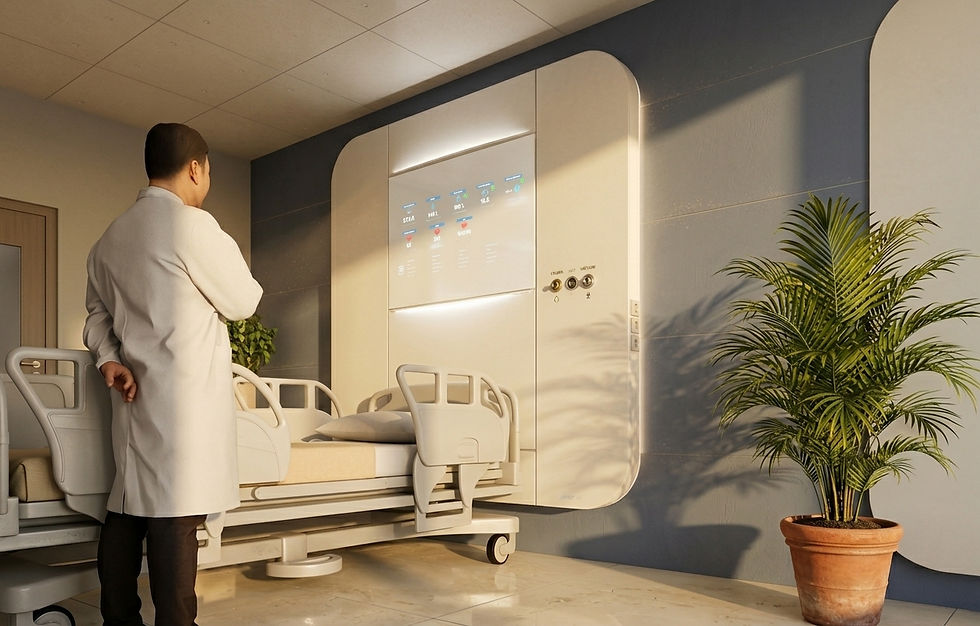
Space dimensions will change. Wardrobes will have shelving at different heights. Sinks will be adjustable. Beds will have structures designed to be tidied with precision. Plants won't be placed casually anymore, but in corners of the house equipped with integrated environmental sensors that communicate their needs to the assistant.


The Daily Routine Reimagined
Picture this morning: you wake up. The humanoid has already made the beds with the precision of a 5-star hotel. The plants, constantly monitored, have received the right amount of water at the optimal time of day. Breakfast? Prepared, on the table at your waking—not a desperate act of survival, but a genuine culinary preparation.
While you're at work:
Intelligent ironing: clothes don't pile up in wardrobes anymore. Each piece is laid out, detached, folded to perfection.
Systematic cleaning: the vacuum isn't an independent drone bumping into furniture. It's a hand that cleans consciously, that moves things, that sweeps.
Windows and surfaces: cleaned daily, not once a month in a stressful marathon.
Perpetual order: no more hidden corners with chaos. Everything has its place because someone (or something) ensures it does.
Sheets replaced: you never wake up wondering if the bedding is clean—it's standard.
And when you're not home?
Here lies perhaps the greatest value: intelligent security.
It's not a camera that records. It's a conscious presence. A humanoid that during your absences:
Monitors access points
Detects unusual sounds
Identifies unexpected presences
Responds to emergencies (a broken window? An alarm? A burning smell?)
Records, alerts, and if needed, acts
It's not paranoia—it's evolved responsibility. Your home is no longer a collection of empty spaces in your absence. It's protected, monitored, alive.
The Evolution of Home Automation
Today, home automation is still an assembly of separate systems: the thermostat doesn't talk to the vacuum. The smart refrigerator doesn't coordinate with the plants.
In the near future, everything converges in a centralized intelligence embodied. The humanoid doesn't receive commands: it understands context. It knows that Tuesday's kitchen windows need extra attention because they get morning light. It knows that some plants in the bedroom don't need water at the same frequency as those in the living room.
The home becomes an integrated organism.
What changes in architecture and design?
Even today, those designing smart homes are already thinking differently:
Wider corridors—so a humanoid can move fluidly
Free heights—surfaces accessible from various angles, not just from our human perspective
Distributed outlets and charging points—strategic places for support and recharging
Intelligent materials—surfaces that facilitate cleaning, fabrics that self-clean
Integrated environmental sensors—not added afterward, but built into the structure itself
Architects of the coming decade will need to think about homes with dual accessibility: one for us, one for who shares the home with us.
The Human Vision
I don't see this evolution as a replacement of human care. I see a liberation from the tedious to embrace the meaningful.
You don't iron anymore, but you read a book. You don't vacuum desperately on Saturday, but walk with your family. You don't wake up in panic wondering "what will the house look like when I return from vacation?"—because you know everything has been cared for.
The recovered time isn't lost in frivolity. It's time to truly live.
The Reality Today
We're still in the early stages. Companies like Boston Dynamics show robots that can walk, grasp, even do a backflip. Tesla is developing Optimus. Other organizations are working on specialized domestic systems.
But the real revolution won't be the single robot—it will be when homes are designed for this from the start. Not as strange additions, but as natural integration of domestic space.
In 5-10 years, we'll visit homes where this isn't science fiction.
The future of the smart home doesn't talk about apps on your phone. It talks about conscious coexistence between human spaces and mechanical intelligence.
And as we write this future, we can already begin thinking differently about our spaces. Which corners of your home could benefit from this vision? Where do you feel domestic workload stealing the time you love?
Perhaps intelligent design begins with these very questions.
Pietro Giglio
Architectural Visual Designer | McRevo Limited
Exploring the intersection between space, technology, and everyday life


Comments